
Craig : Your questions answered
Answering Your Questions About Craig and Africa’s Great Tuskers
Following our recent tribute to Craig, the legendary Great Tusker of Amboseli, we have received an outpouring of messages and thoughtful questions from supporters around the world. As the founder of Saving The Survivors, a world-renowned elephant veterinarian, and the author of several books dedicated to tuskers, Dr. Johan Marais is uniquely placed to provide clarity and context. Below, we share his answers to the most frequently asked questions.
What was the cause of Craig’s death, and was 54 a normal age to pass?
Elephants only have six sets of molars (teeth) during their lifetime. The final set erupts at around 30 years of age and then wears down gradually over time. Once these molars are too worn, an elephant can no longer chew or digest food effectively, which ultimately leads to death through starvation.
While there have been some reports suggesting a ruptured gut, Craig was already 54 years old. Long-term research in Amboseli shows that very few bull elephants live beyond 52 years, due to a combination of factors. In this context, Craig actually did exceptionally well to reach the beginning of his 54th year.
Was Craig alone when he passed?
No. Rangers from the Big Life Foundation were with Craig throughout the night. They noticed he was becoming weaker on 2 January and stayed with him until the end. Big Life and their rangers do an extraordinary job protecting iconic bulls like Craig, as well as other wildlife in the region.
Was his death quick, painless, and natural?
Craig’s passing was natural. While it is impossible to know whether it was completely painless, there were no signs of struggle or distress observed.
Did Craig have any offspring?
Yes. Craig definitely has offspring in and around the Amboseli region, meaning his genes will live on through many calves. The peak reproductive age for bull elephants is between 40 and 50 years, and Craig would have sired numerous calves during his lifetime—particularly during this key decade.
What will happen to Craig’s body?
It appears that the Kenyan authorities have taken Craig’s body to Nairobi for eventual display in a museum. Given his iconic status, this will allow future generations to learn about and appreciate one of Africa’s last great tuskers.
How many great tuskers are left?
A great tusker is defined as an elephant carrying 100 pounds (45 kg) or more of ivory in one or both tusks.
Africa is home to approximately 400,000 elephants, but it is estimated that only around 50 great tuskers remain. That means just 0.01% of the population still carries such large ivory.
One hundred years ago, this percentage was dramatically higher—likely 30% or more. Relentless hunting and poaching of bulls before the age of 40 meant they were killed before they had sufficient opportunity to pass on their genes. Bulls only begin carrying heavy ivory from around 35 years of age, so removing them early has had a devastating genetic impact on tusker populations.
Are there young tuskers today?
Yes, there is hope. There are several promising young tuskers in Kruger National Park (South Africa), Tembe Elephant Park (South Africa), Tsavo National Park (Kenya), and Amboseli National Park (Kenya). Some of these emerging bulls—including individuals such as Xidudla, Nambu, and Tee-jay—represent the future of great tuskers.
Many of these elephants will be featured in Dr. Johan Marais’ third Tusker book, due for release later this year.
Craig’s life—and his peaceful passing—remind us both of what has been lost and what can still be saved. His story reinforces why continued protection, patience, and long-term commitment are essential if future generations are to witness giants like him roaming free.
Thank you for your compassion, your questions, and your continued support of elephant conservation.


MORE BUSH JOURNAL
Tracking Giants
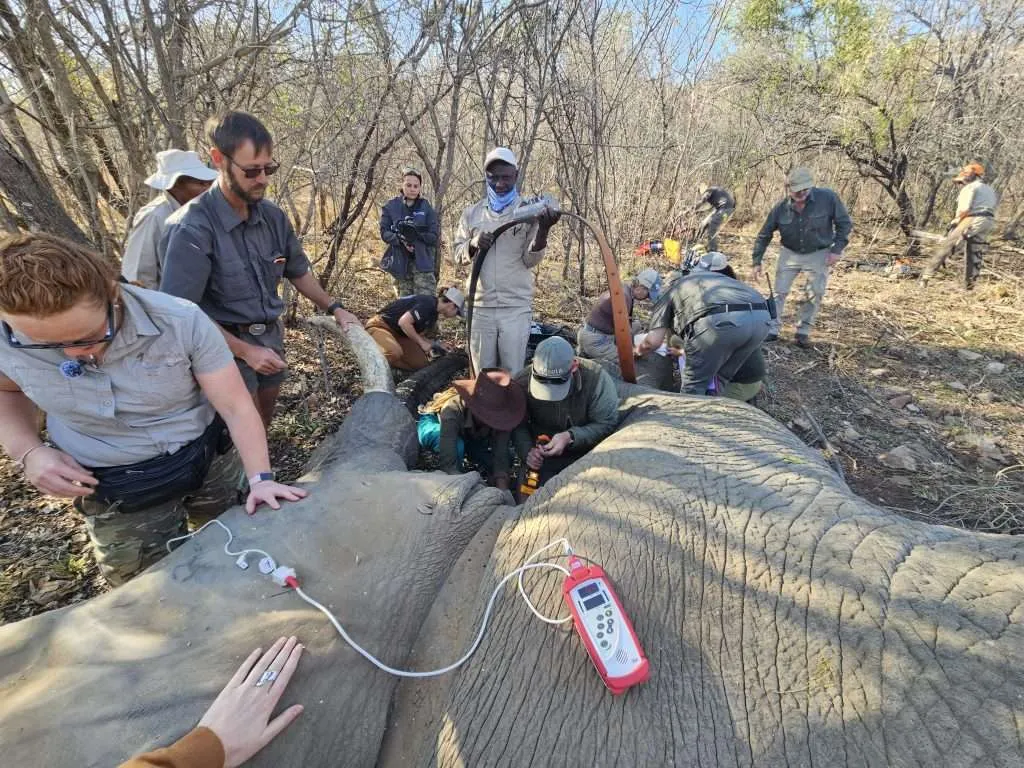
New Technology Helps Protect Elephant Bulls Saving the Survivors has recently supported the re-collaring of two elephant bulls — one subadult and one mature — using state-of-the-art Rouxcel tracking collars. The intervention forms part of our ongoing commitment to combining veterinary expertise, field conservation and innovative technology to better understand and protect Africa’s wildlife. The … Continued

World Elephant Day 2026
Protecting Africa’s Gentle Giants Today, on World Elephant Day, Saving the Survivors celebrates one of the most extraordinary and iconic animals to walk our planet — the elephant. Elephants have always held a very special place in the work of Saving the Survivors. Over the years, our veterinary teams have worked with countless elephants across … Continued

Technology Helping Pangolins Thrive in the Wild
Every successful wildlife release marks the beginning of a new chapter, but ensuring an animal continues to thrive in the wild requires ongoing monitoring. For species as vulnerable as the pangolin, every check-up provides invaluable insight into the success of their rehabilitation and release. Recently, the Saving The Survivors team returned to the field to … Continued

Strengthening the Future of White Rhinos Through Genetic Conservation
Saving the Survivors, in partnership with the Veterinary Conservation Coalition (VCC), has successfully completed the translocation of several White rhino cows to a South African reserve where no new genetics had been introduced for more than 20 years. Although moving rhinos is a complex and carefully planned operation, this project was about much more than … Continued

Innocent Victim:
White Rhino Saved After Devastating Snare Injury Every snare tells a tragic story. Not because it catches the animal it was intended for, but because it so often catches those it was never meant to. This adult White rhinoceros cow became one of those innocent victims. When our veterinary team located her, she was suffering … Continued

Nature's Medicine at Work
A Remarkable Rhino Recovery A few weeks ago, we shared the story of a Southern White Rhino mother suffering from a significant wound to her hindquarters, most likely caused by the horn of an overenthusiastic bull. At the time, the injury was extensive and vulnerable to infection. In the harsh conditions of the African bush, … Continued

Big Ben's Battle Scars:
An Unusual Treatment for an Extraordinary Patient Life for a dominant bull rhino is rarely peaceful. For Big Ben, one of the area’s largest and most powerful white rhinos, a recent territorial dispute left him with a significant facial wound. Like many mature bulls, Big Ben regularly encounters rivals competing for territory, breeding rights, and … Continued

A Rhino, An Elephant and a Race Against Time
At Saving the Survivors, no two wildlife interventions are ever the same. Recently, our veterinary team was called to assist a White Rhino cow suffering from a severely damaged horn. While injuries to horns can appear straightforward at first glance, they often require careful assessment and treatment to prevent complications and ensure the animal’s long-term … Continued

Monitoring One of Africa’s Most Vulnerable Predators
Saving the Survivors recently carried out an important conservation intervention involving an adult male cheetah living on a protected property where a coalition of males was successfully introduced by Saving the Survivors and the Veterinary Conservation Coalition in 2025. As part of our ongoing monitoring and conservation work, the cheetah was carefully immobilised by our … Continued

Hope Continues Her Frontline Mission Protecting Wildlife
At Saving the Survivors, every success story is built on the support of people who believe wildlife is worth protecting. Hope, one of our anti-poaching K9s, is a perfect example of what that support can achieve. Thanks to the generosity of our supporters, Hope was purchased, trained, and deployed to help protect wildlife on the … Continued

A Mother’s Strength in the African Bush
Out in the African bush, survival is never easy. Every day brings new challenges, and even the strongest animals can suffer painful injuries in the wild. Recently, the veterinary team from Saving the Survivors responded to help a Southern White Rhino cow found with a significant wound to her back leg, most likely caused by … Continued

Eight Years On:
A Story of Strength, Survival, and Hope Eight years ago, a magnificent adult bull elephant suffered a fracture to his left front limb — an injury that could easily have marked the end of his journey. But this elephant endured. Recently, our Founder and Head Veterinarian, Dr Johan Marais, returned with the Saving the Survivors … Continued

