
Elephant Kings
Great Tuskers and the Weight of History
Following the immense global interest in tuskers after the passing of Craig earlier this month, many questions have arisen about these extraordinary elephants and the immense ivory they carried. To help place Craig—and great tuskers like him—into historical context, we share the following insights, many drawn from Dr. Johan Marais’ book Great Tuskers of Africa.
The Heaviest Ivory Ever Recorded
Although not officially listed in Rowland Ward’s Records of Big Game, the heaviest single tusk ever recorded was exhibited in Paris in 1900. This remarkable tusk weighed an astonishing 258 pounds (117 kg) and originated from Dahomey (modern-day Benin) in West Africa. Sadly, the current whereabouts of this tusk are unknown.
There are also historical references to an even more extraordinary pair of tusks. In 1872, the explorer Sir Richard Burton wrote of tusks weighing 280 pounds (127 kg) each, reportedly sent from Mozambique to the King of Portugal. While these tusks were never officially verified, their mention underscores the immense ivory that once existed across Africa.
The World Record Tusks: The Kilimanjaro Bull
The largest verified tusks ever recorded belonged to an elephant known as the “Kilimanjaro Bull.” This legendary tusker was shot in 1898 on the slopes of Mount Kilimanjaro by Senoussi, one of the ivory hunters working for Hamed bin Muhammed, better known as Tippu Tip.
According to Senoussi, the elephant was not exceptionally large in body size, but his shoulders and haunches were well developed. His tusks were so long that they reached the ground, curving inward until their tips almost touched. To walk without the tusks digging into the soil, the bull had to lift his head high with each step.
When the ivory reached Zanzibar in 1898, the tusks were weighed:
- Left tusk: 232 pounds (105.3 kg)
- Right tusk: 228 pounds (103.5 kg)
The tusks were sold in Zanzibar in 1900 for $5,000—a vast fortune at the time—and purchased by the American ivory trading company Arnold Cheney & Co. They were displayed publicly before being sold separately.
- The left tusk was acquired by the British Museum in 1901.
- The right tusk went to the Sheffield cutlery firm Joseph Rodgers & Sons, where it stood at the entrance to their showroom.
In 1932, after mediation by Rowland Ward Ltd, the right tusk was also sold to the British Museum. After nearly 30 years apart, the tusks were reunited and placed on exhibition. Following an attempted theft in 1937, they were removed from public display and stored securely in a vault beneath the museum, where they remain today.
This story is accompanied by a historic photograph taken in Zanzibar in 1898, showing the world record tusks displayed outside the door of E. D. Moore, agent of the American company that purchased them.
Craig and the Genetics of Great Tuskers
Tusk size in elephants is strongly genetically driven. For this reason, it is entirely possible that Craig—the great tusker of Amboseli—was a descendant of the Kilimanjaro Bull. Without such genetic inheritance, tusks of Craig’s size simply do not occur.
Craig’s existence well into his most prolific reproductive years allowed those rare genes to be passed on, something that is tragically uncommon today.
The Decline of the Great Tuskers
Two hundred years ago, large-tusked elephants were far more common across Africa. Historical accounts suggest that a significant percentage of adult bulls carried heavy ivory.
The catastrophic decline began in the mid-1800s, around 1850, driven by several converging factors:
- The invention and widespread availability of firearms
- Improved transport routes into Africa
- Exploding global demand for ivory for piano keys, billiard balls, jewellery, and decorative items
Bulls with the largest tusks were targeted first, often being killed before the age of 40, long before they could pass on their genes. Over time, this selective removal caused a genetic collapse in tusk size.
Today, Africa is home to approximately 400,000 elephants, yet it is estimated that fewer than 40 great tuskers remain.
Why Craig Mattered
Craig was not only a magnificent individual; he was living proof of what long-term protection can achieve. His survival into his mid-50s allowed rare tusker genetics to persist in the Amboseli population—something that would have been almost impossible a century ago.
Understanding the history of ivory and the loss of great tuskers helps us appreciate just how exceptional Craig truly was—and why protecting the remaining giants is one of the most urgent challenges in elephant conservation today.
His legacy lives on not only in memory, but potentially in the next generation of tuskers yet to walk the African landscape.


MORE BUSH JOURNAL
Tracking Giants
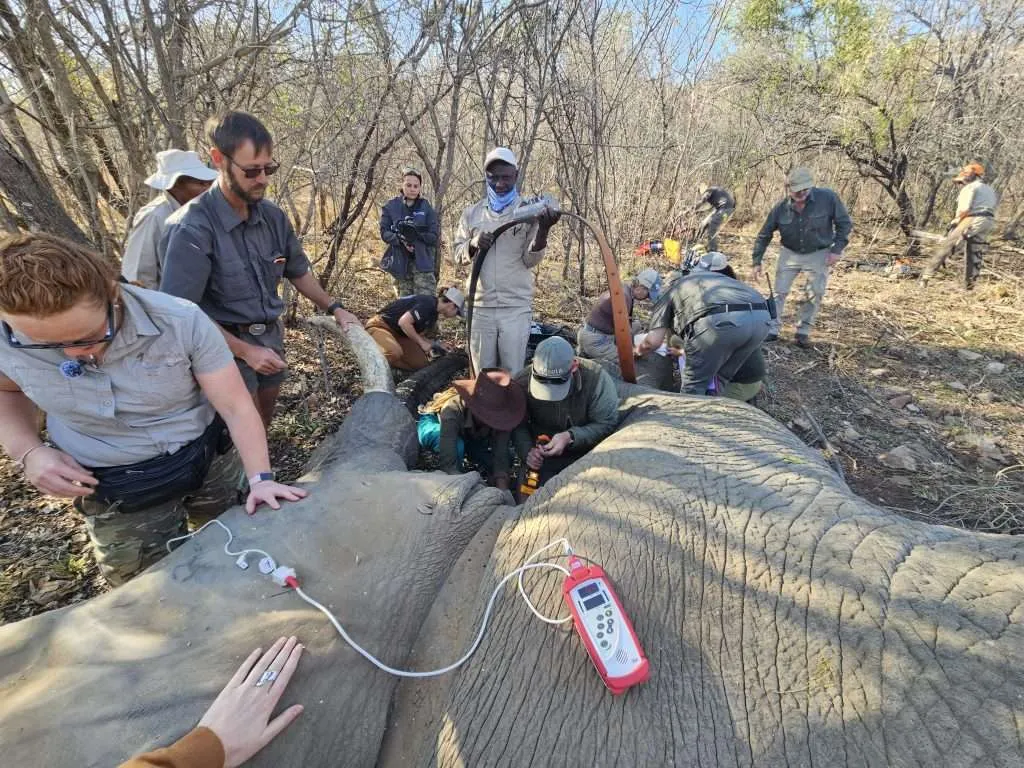
New Technology Helps Protect Elephant Bulls Saving the Survivors has recently supported the re-collaring of two elephant bulls — one subadult and one mature — using state-of-the-art Rouxcel tracking collars. The intervention forms part of our ongoing commitment to combining veterinary expertise, field conservation and innovative technology to better understand and protect Africa’s wildlife. The … Continued

World Elephant Day 2026
Protecting Africa’s Gentle Giants Today, on World Elephant Day, Saving the Survivors celebrates one of the most extraordinary and iconic animals to walk our planet — the elephant. Elephants have always held a very special place in the work of Saving the Survivors. Over the years, our veterinary teams have worked with countless elephants across … Continued

Technology Helping Pangolins Thrive in the Wild
Every successful wildlife release marks the beginning of a new chapter, but ensuring an animal continues to thrive in the wild requires ongoing monitoring. For species as vulnerable as the pangolin, every check-up provides invaluable insight into the success of their rehabilitation and release. Recently, the Saving The Survivors team returned to the field to … Continued

Strengthening the Future of White Rhinos Through Genetic Conservation
Saving the Survivors, in partnership with the Veterinary Conservation Coalition (VCC), has successfully completed the translocation of several White rhino cows to a South African reserve where no new genetics had been introduced for more than 20 years. Although moving rhinos is a complex and carefully planned operation, this project was about much more than … Continued

Innocent Victim:
White Rhino Saved After Devastating Snare Injury Every snare tells a tragic story. Not because it catches the animal it was intended for, but because it so often catches those it was never meant to. This adult White rhinoceros cow became one of those innocent victims. When our veterinary team located her, she was suffering … Continued

Nature's Medicine at Work
A Remarkable Rhino Recovery A few weeks ago, we shared the story of a Southern White Rhino mother suffering from a significant wound to her hindquarters, most likely caused by the horn of an overenthusiastic bull. At the time, the injury was extensive and vulnerable to infection. In the harsh conditions of the African bush, … Continued

Big Ben's Battle Scars:
An Unusual Treatment for an Extraordinary Patient Life for a dominant bull rhino is rarely peaceful. For Big Ben, one of the area’s largest and most powerful white rhinos, a recent territorial dispute left him with a significant facial wound. Like many mature bulls, Big Ben regularly encounters rivals competing for territory, breeding rights, and … Continued

A Rhino, An Elephant and a Race Against Time
At Saving the Survivors, no two wildlife interventions are ever the same. Recently, our veterinary team was called to assist a White Rhino cow suffering from a severely damaged horn. While injuries to horns can appear straightforward at first glance, they often require careful assessment and treatment to prevent complications and ensure the animal’s long-term … Continued

Monitoring One of Africa’s Most Vulnerable Predators
Saving the Survivors recently carried out an important conservation intervention involving an adult male cheetah living on a protected property where a coalition of males was successfully introduced by Saving the Survivors and the Veterinary Conservation Coalition in 2025. As part of our ongoing monitoring and conservation work, the cheetah was carefully immobilised by our … Continued

Hope Continues Her Frontline Mission Protecting Wildlife
At Saving the Survivors, every success story is built on the support of people who believe wildlife is worth protecting. Hope, one of our anti-poaching K9s, is a perfect example of what that support can achieve. Thanks to the generosity of our supporters, Hope was purchased, trained, and deployed to help protect wildlife on the … Continued

A Mother’s Strength in the African Bush
Out in the African bush, survival is never easy. Every day brings new challenges, and even the strongest animals can suffer painful injuries in the wild. Recently, the veterinary team from Saving the Survivors responded to help a Southern White Rhino cow found with a significant wound to her back leg, most likely caused by … Continued

Eight Years On:
A Story of Strength, Survival, and Hope Eight years ago, a magnificent adult bull elephant suffered a fracture to his left front limb — an injury that could easily have marked the end of his journey. But this elephant endured. Recently, our Founder and Head Veterinarian, Dr Johan Marais, returned with the Saving the Survivors … Continued

