
Rescue in the Bush:
A Young Rhino’s Lucky Escape
Earlier this week, Saving The Survivors was called out to a case that began with great concern—and thankfully, ended with a life saved.
Rangers at the Insimbi reserve had spotted a young Southern White Rhino bull with wire wrapped around his head, neck, and body. The sight of wire on any wild animal instantly raises fears of a snare trap—devices set by poachers to catch smaller game like antelope for bush meat, but which tragically often ensnare and severely injure or kill larger species like elephants, lions, giraffes, and rhinos.
Fearing the worst, the rangers went on high alert, aware that the presence of a snare could mean poachers were active in the area. They contacted our founder and head veterinarian, Dr. Johan Marais, who immediately mobilised to respond.
No Helicopter? Call in the HurleyBird
In situations like this, time is critical. The fastest way to locate and dart a distressed animal in the wild is from the air. Unfortunately, no helicopter support was available. But in the conservation world, collaboration is everything—and we’re lucky to count on friends like Michelle Hurley, the original “HurleyBird,” and her incredible BathHawk anti-poaching plane.
Michelle quickly took to the skies and began scouting the reserve. From the air, she located the rhino and expertly guided Dr. Johan and the rangers—who were navigating off-road in dense bush—directly to the animal’s location.
A Different Kind of Danger
Once on the scene, Dr. Johan was able to get close enough to safely dart the young rhino. As the team moved in to cut the wire, it quickly became clear that this wasn’t a poacher’s snare after all. The wire was fence wire, and the rhino—about 3.5 years old—had evidently charged through a fence, becoming entangled in the process.
The change in atmosphere was immediate. What had started as a high-stress emergency with potential poaching threats turned into a focused rescue effort, aimed at freeing this young bull and ensuring he could return safely to his crash.
A Lucky Break
Thanks to the rangers’ vigilance, the wire had not yet caused significant injury. But it easily could have—fence wire and snares alike can cut deep into skin and muscle, causing long-term damage, infection, and often death. We’ve seen the worst, and we know how lucky this rhino was to have been spotted in time.
Thank You for Making This Possible
This rescue was only possible because of the dedicated people involved—and the generosity of those who support us.
To the Insimbi management, staff and rangers, who noticed something was wrong and acted fast: thank you.
To Michelle Hurley, who always answers the call to help wildlife in need: we are deeply grateful.
And to you, our loyal supporters: this young rhino is alive today because of your donations.
Saving The Survivors is 100% donor funded. Every rescue, every recovery, every life saved depends on your continued support.
If you’d like to help us be ready for the next emergency, please consider donating today.
➡️ CLICK HERE
Together, we are saving the survivors.


MORE BUSH JOURNAL
Tracking Giants
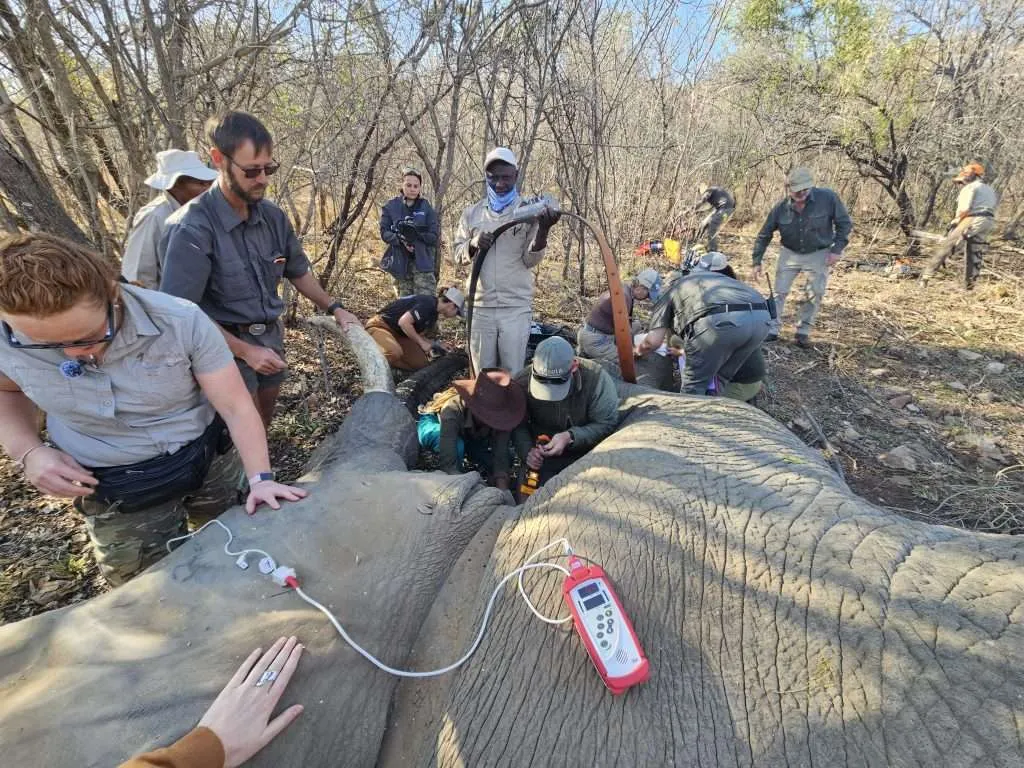
New Technology Helps Protect Elephant Bulls Saving the Survivors has recently supported the re-collaring of two elephant bulls — one subadult and one mature — using state-of-the-art Rouxcel tracking collars. The intervention forms part of our ongoing commitment to combining veterinary expertise, field conservation and innovative technology to better understand and protect Africa’s wildlife. The … Continued

World Elephant Day 2026
Protecting Africa’s Gentle Giants Today, on World Elephant Day, Saving the Survivors celebrates one of the most extraordinary and iconic animals to walk our planet — the elephant. Elephants have always held a very special place in the work of Saving the Survivors. Over the years, our veterinary teams have worked with countless elephants across … Continued

Technology Helping Pangolins Thrive in the Wild
Every successful wildlife release marks the beginning of a new chapter, but ensuring an animal continues to thrive in the wild requires ongoing monitoring. For species as vulnerable as the pangolin, every check-up provides invaluable insight into the success of their rehabilitation and release. Recently, the Saving The Survivors team returned to the field to … Continued

Strengthening the Future of White Rhinos Through Genetic Conservation
Saving the Survivors, in partnership with the Veterinary Conservation Coalition (VCC), has successfully completed the translocation of several White rhino cows to a South African reserve where no new genetics had been introduced for more than 20 years. Although moving rhinos is a complex and carefully planned operation, this project was about much more than … Continued

Innocent Victim:
White Rhino Saved After Devastating Snare Injury Every snare tells a tragic story. Not because it catches the animal it was intended for, but because it so often catches those it was never meant to. This adult White rhinoceros cow became one of those innocent victims. When our veterinary team located her, she was suffering … Continued

Nature's Medicine at Work
A Remarkable Rhino Recovery A few weeks ago, we shared the story of a Southern White Rhino mother suffering from a significant wound to her hindquarters, most likely caused by the horn of an overenthusiastic bull. At the time, the injury was extensive and vulnerable to infection. In the harsh conditions of the African bush, … Continued

Big Ben's Battle Scars:
An Unusual Treatment for an Extraordinary Patient Life for a dominant bull rhino is rarely peaceful. For Big Ben, one of the area’s largest and most powerful white rhinos, a recent territorial dispute left him with a significant facial wound. Like many mature bulls, Big Ben regularly encounters rivals competing for territory, breeding rights, and … Continued

A Rhino, An Elephant and a Race Against Time
At Saving the Survivors, no two wildlife interventions are ever the same. Recently, our veterinary team was called to assist a White Rhino cow suffering from a severely damaged horn. While injuries to horns can appear straightforward at first glance, they often require careful assessment and treatment to prevent complications and ensure the animal’s long-term … Continued

Monitoring One of Africa’s Most Vulnerable Predators
Saving the Survivors recently carried out an important conservation intervention involving an adult male cheetah living on a protected property where a coalition of males was successfully introduced by Saving the Survivors and the Veterinary Conservation Coalition in 2025. As part of our ongoing monitoring and conservation work, the cheetah was carefully immobilised by our … Continued

Hope Continues Her Frontline Mission Protecting Wildlife
At Saving the Survivors, every success story is built on the support of people who believe wildlife is worth protecting. Hope, one of our anti-poaching K9s, is a perfect example of what that support can achieve. Thanks to the generosity of our supporters, Hope was purchased, trained, and deployed to help protect wildlife on the … Continued

A Mother’s Strength in the African Bush
Out in the African bush, survival is never easy. Every day brings new challenges, and even the strongest animals can suffer painful injuries in the wild. Recently, the veterinary team from Saving the Survivors responded to help a Southern White Rhino cow found with a significant wound to her back leg, most likely caused by … Continued

Eight Years On:
A Story of Strength, Survival, and Hope Eight years ago, a magnificent adult bull elephant suffered a fracture to his left front limb — an injury that could easily have marked the end of his journey. But this elephant endured. Recently, our Founder and Head Veterinarian, Dr Johan Marais, returned with the Saving the Survivors … Continued

